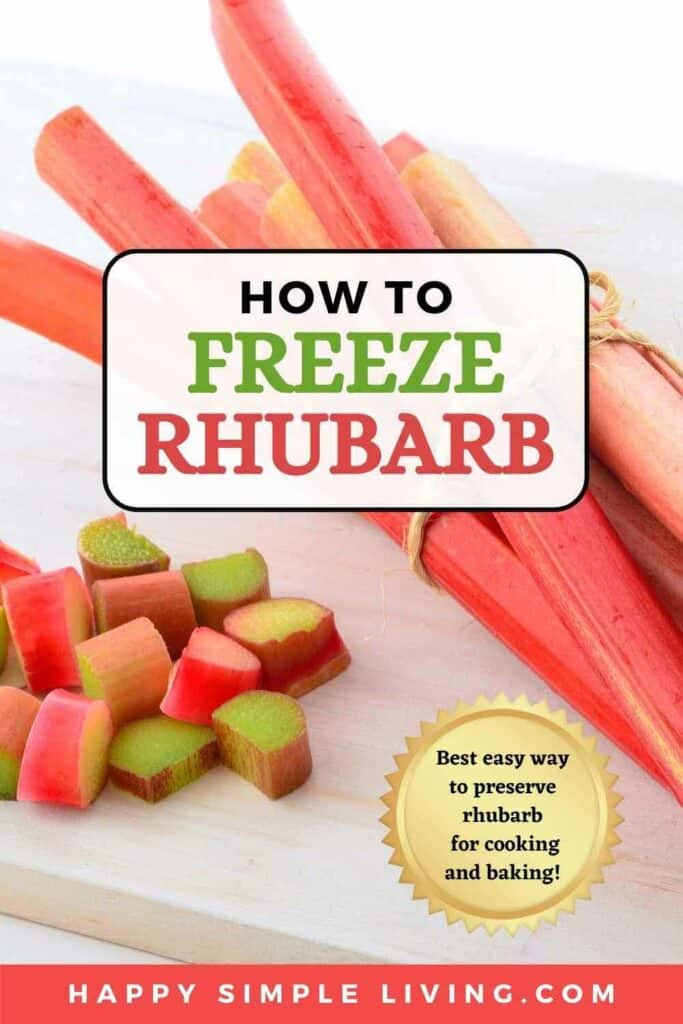
Ever wondered how to freeze rhubarb for later use? In this post, I’ll share my favorite method for freezing chopped rhubarb so it stays fresh and flavorful for many months.
Rhubarb is a versatile and very tasty vegetable (yes, it is technically a vegetable!) that I love to cook with in recipes like pies, crumbles, jams, and more.
However, rhubarb has a relatively short growing season, typically from late spring to early summer. This means that if you want to enjoy rhubarb year-round, you’ll want to preserve it in some way. One of the best ways to do this is by freezing it.
This post may contain affiliate links. Please review our disclosure policy.
Do you grow your own rhubarb? Not only does freezing it help to extend the life of your rhubarb harvest, but it also makes it easy to use rhubarb in a wide range of recipes.
Why You’ll Love Freezing Rhubarb
Next winter, you’ll be so glad you preserved some fresh rhubarb by freezing it! Here are some reasons why:
To preserve the harvest: Rhubarb has a relatively short growing season, typically from late spring to early summer. Freezing rhubarb is an excellent way be able to enjoy your harvest throughout the year.
Convenience: Frozen rhubarb is convenient to use in recipes because it’s already prepped and chopped. This can save you time and effort in the kitchen.
Versatility: Frozen rhubarb can be used in a wide range of dishes, such as pies, rhubarb crisp, muffins, smoothies, and more (see ideas below). By freezing it, you can have it on hand to use in your favorite rhubarb recipes whenever you like.
Step by Step Directions
Raw rhubarb freezes quite well, especially if you give it a quick blanche in boiling water.
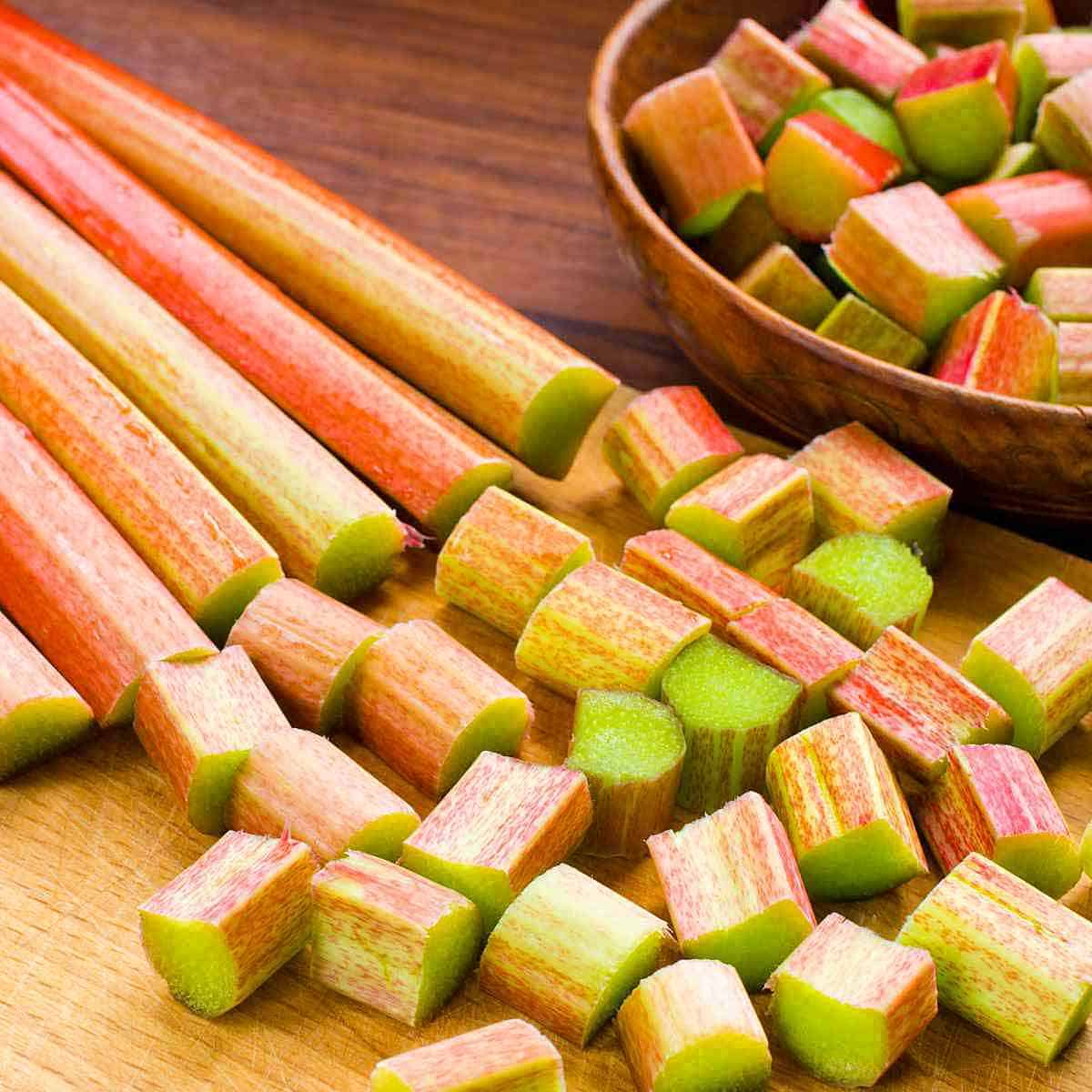
STEP ONE: Simply trim the leaves and root ends from the rhubarb stalks. (Rhubarb leaves are toxic, so be sure to discard them.) Chop the rhubarb in 1-inch pieces.
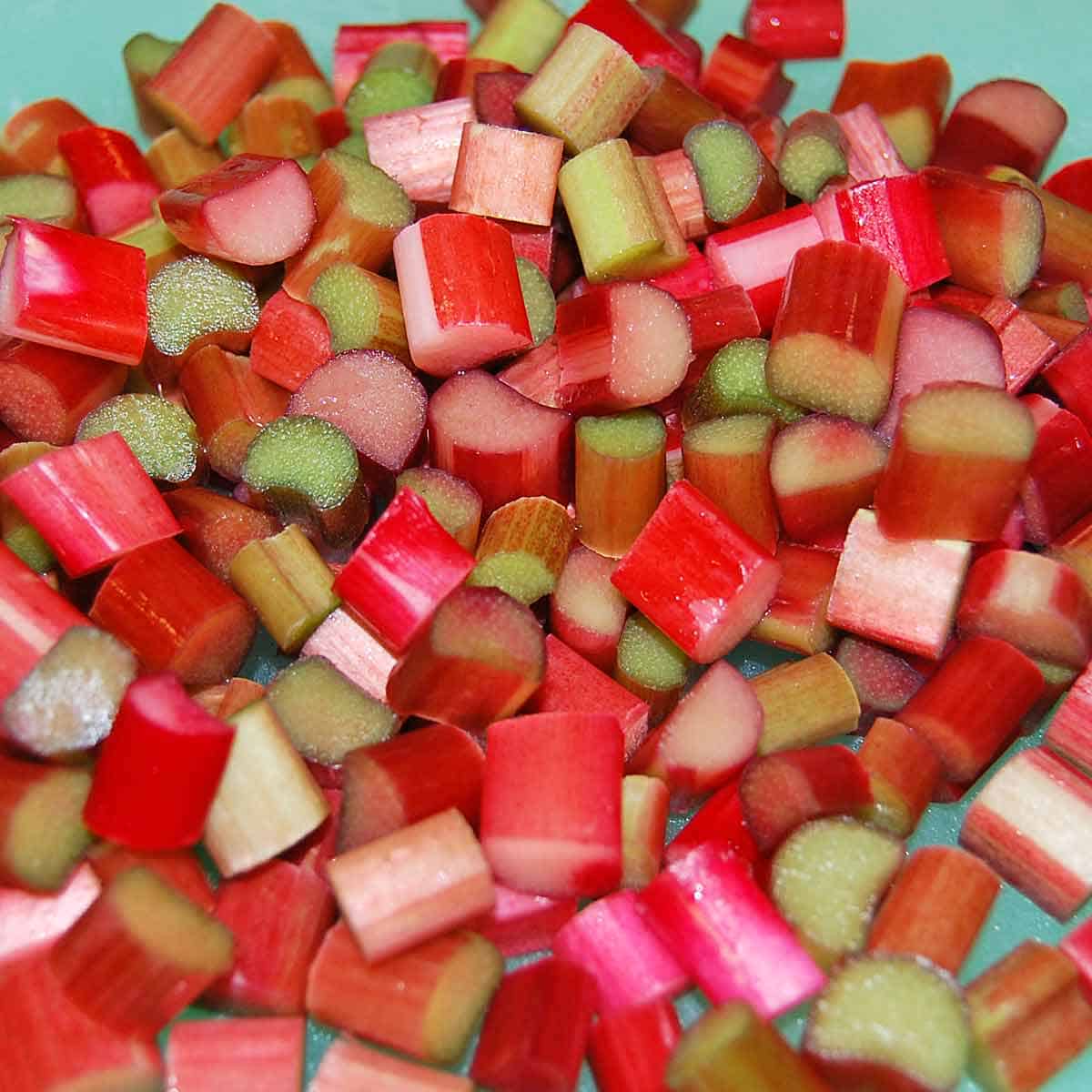
STEP TWO: Drop it into a large pot of boiling water:
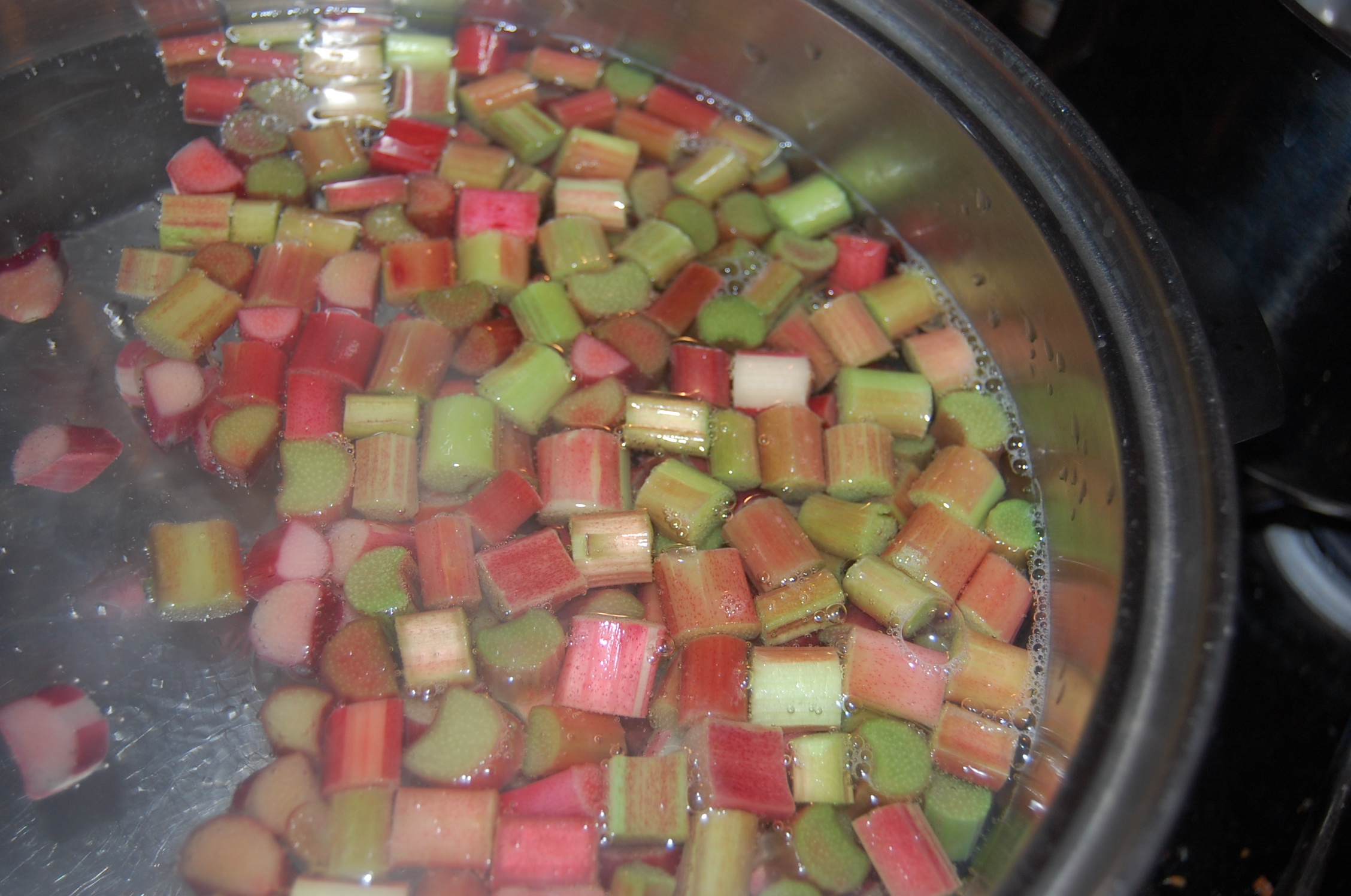
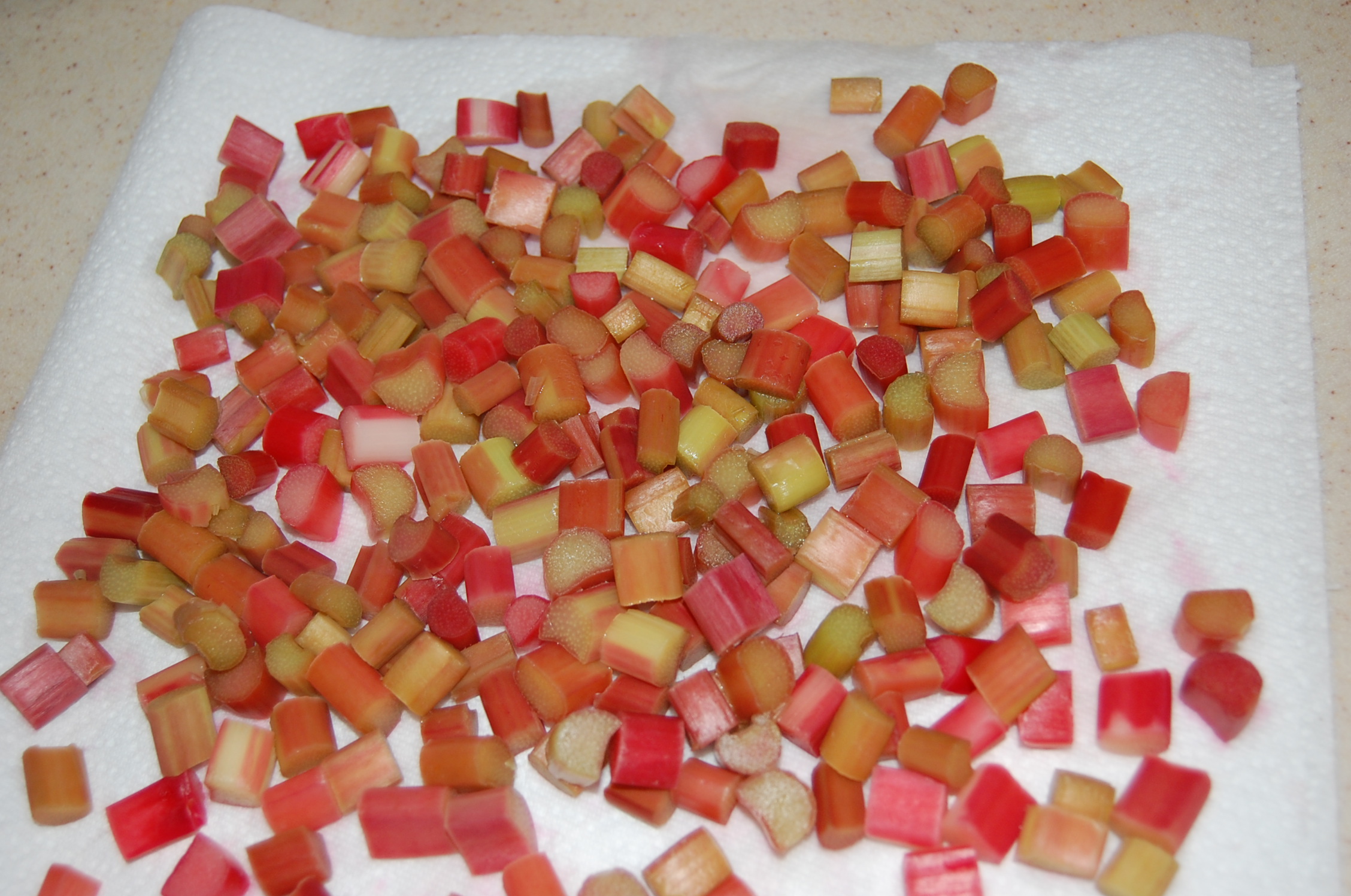
STEP THREE: Cook for just one minute, then quickly remove the rhubarb with a slotted spoon and spread it on paper towels to drain.
STEP FOUR: Spread the rhubarb on a parchment-lined baking sheet and freeze, to keep the individual pieces separate rather than freezing in a mass. Then simply fold up the parchment paper around the frozen rhubarb:
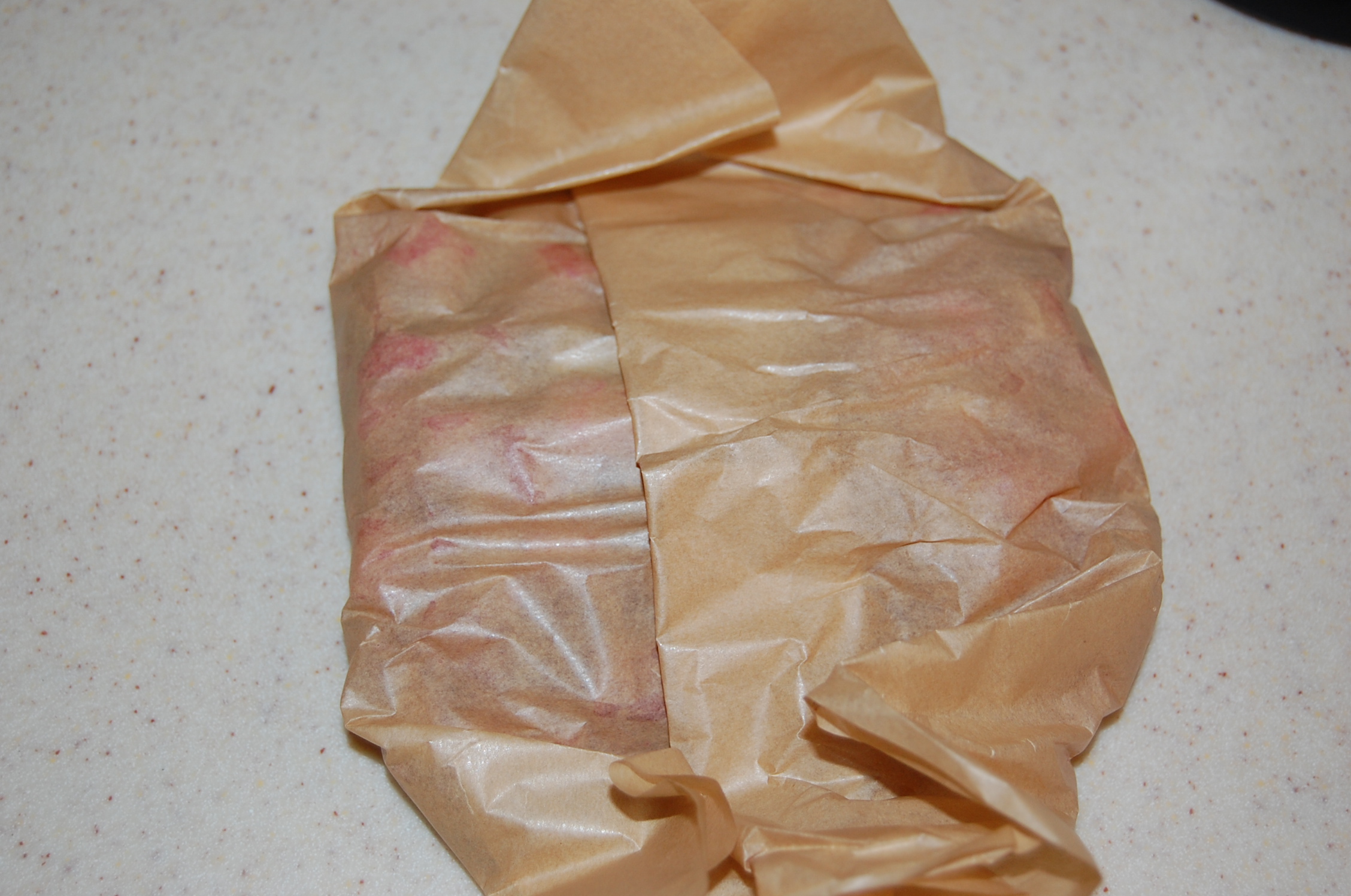
…to make a nice, tidy packet.
STEP FIVE: Then tuck the parchment packet into a freezer bag, squeeze out as much air as you can, and store it for up to six months in the freezer. You can also use a vacuum sealer.
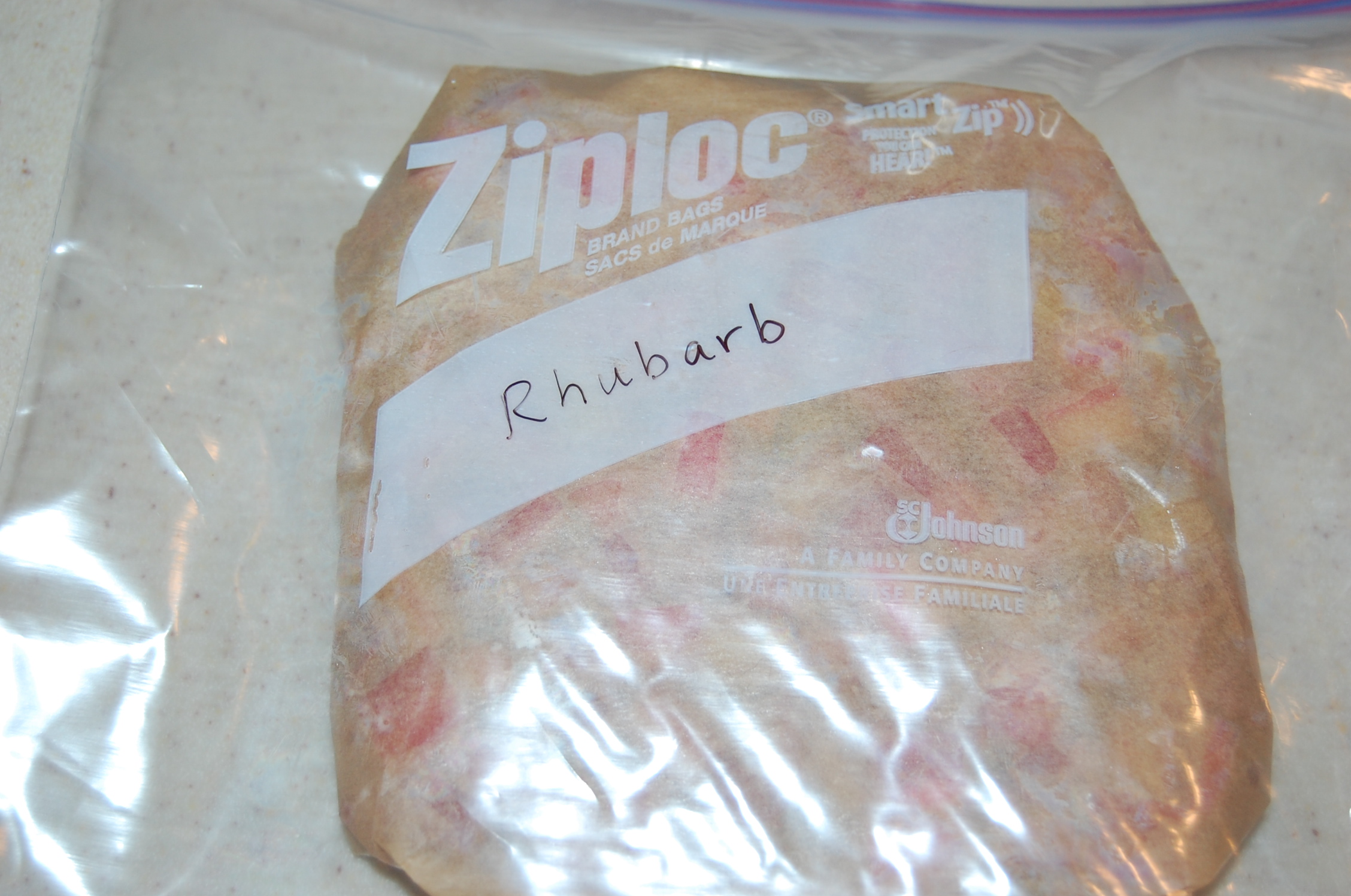
A note about freezer bags: Although they are purported to be manufactured from ‘safe’ polyethylene, I try to avoid having food come directly in contact with plastic whenever possible. Because I wrap foods for the freezer in parchment paper, we can easily reuse freezer-safe bags numerous times.
How to Thaw Frozen Rhubarb
Thawing frozen rhubarb is a simple process, and there are a few different methods you can use depending on how quickly you need. Here are three methods for thawing frozen rhubarb:
Overnight in the Refrigerator: My favorite method, the easiest and most convenient way to thaw frozen rhubarb is to simply transfer it from the freezer to the refrigerator and let it thaw overnight. This allows the rhubarb to thaw slowly and evenly, and it will be ready to use the next day.
Room Temperature: If you need to thaw rhubarb more quickly, you can place it in a bowl at room temperature. The rhubarb will thaw faster than it would in the refrigerator, but it may not thaw quite as evenly. Stirring it occasionally will help with more even thawing. If you’re not using it right away, cover and refrigerate as soon as it’s thawed.
Microwave: If you need to thaw rhubarb very quickly, you can use the defrost setting on your microwave. Place the frozen rhubarb in a microwave-safe dish, and microwave on the defrost setting in 30-second intervals, stirring in between each interval, until the rhubarb is thawed. Be careful not to overheat the rhubarb, as this can cause it to become mushy.
Pro Tip: Once your rhubarb is thawed, it’s ready to use in your favorite recipes. Be sure to drain off any excess liquid that may have accumulated during the thawing process, as this can affect the texture of your final dish.
How to Use Frozen Rhubarb
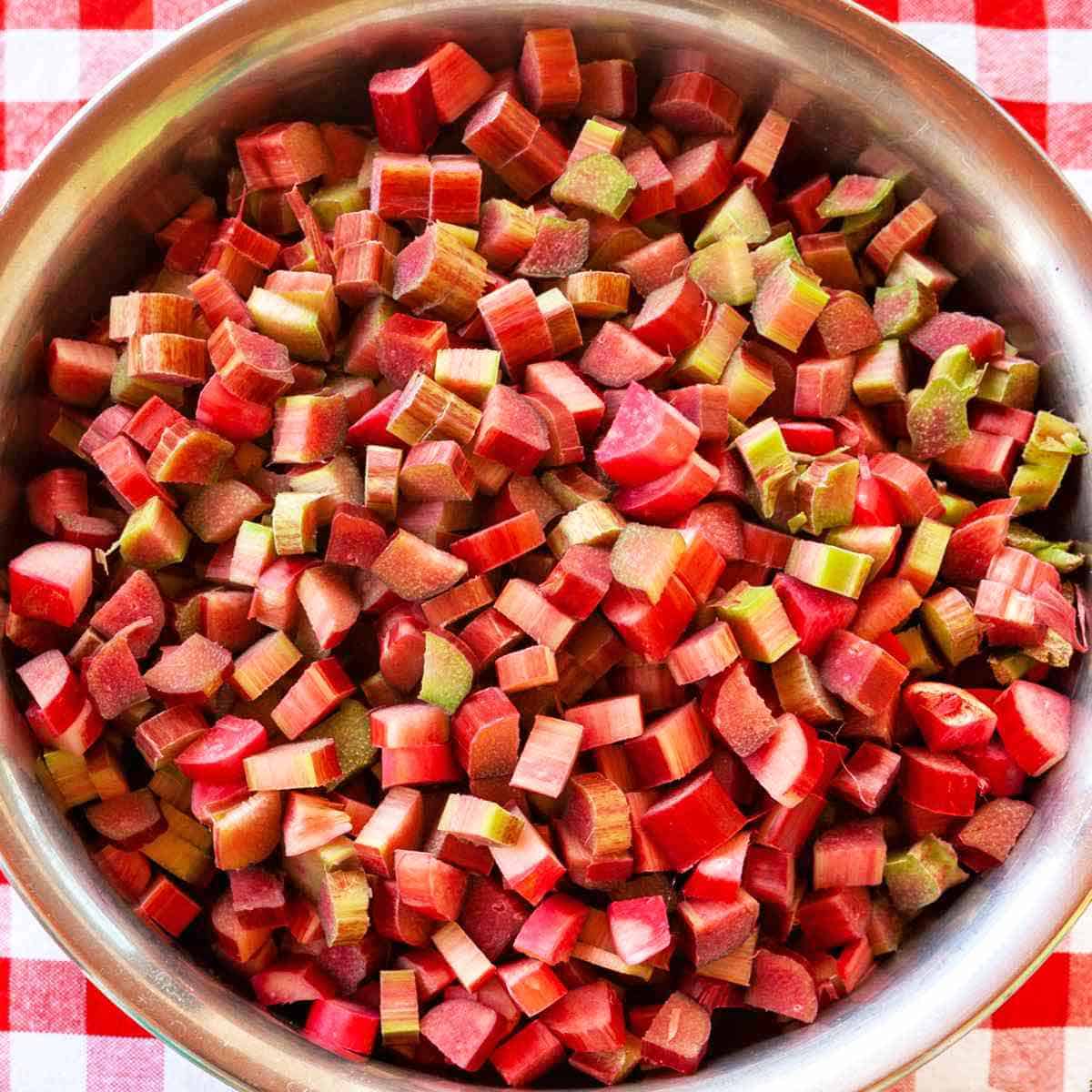
There are SO many delicious ways to use thawed, frozen rhubarb in your cooking and baking, from desserts and crisps to drinks and sauces! Here are some of my favorite rhubarb recipes to get you started:
- Rhubarb Pie
- Rhubarb Crumble Bars
- Cinnamon Swirl Rhubarb Bread
- Rhubarb Sauce
- Rhubarb Splash Drink
- Old Fashioned Rhubarb Cake
- Rhubarb Jam
- Rhubarb Scones
- Rhubarb Chutney
- Rhubarb Cheesecake
- Strawberry Rhubarb Jam
Blanching is a quick process that helps preserve rhubarb’s color, texture, and flavor. By briefly cooking it in boiling water and rapidly cooling it in ice water, enzymes are deactivated that can cause the rhubarb to lose its bright color.
I generally like to thaw it, but if you’re adding it to a rhubarb crisp or crumble that will bake in the oven, it’s not necessary. You may need to add a couple of minutes to the total baking time if you use frozen rhubarb.
Usually this step is unnecessary. The only time you need to peel rhubarb is if the stalks are exceptionally tough or woody. In this case, you can use a sharp potato peeler to remove just the outer layer of the rhubarb stalks.
Printable Recipe Card

How to Freeze Rhubarb
Equipment
- Sharp knife
- Cutting board
- Large bowl
- Large pot
- strainer
- paper towels
- Baking sheet
- Parchment paper
- freezer bag
Ingredients
- 1 pound fresh rhubarb stalks
- 4 quarts water
- 2 quarts ice water
Instructions
- Wash the rhubarb under cold water, trimming off the leaves and tough ends. Discard the leaves, as they are toxic.
- Slice the rhubarb in 1-inch pieces (or your preferred size.)
- Prepare a large bowl of ice water and set aside.
- Bring a large pot of water to a rolling boil, using four quarts of water for each pound of rhubarb.
- Add the rhubarb to the boiling water and cook for one minute. Immediately strain the rhubarb and add to the ice water bath. Let it sit in the ice water for several minutes to stop the cooking process, then drain thoroughly on paper towels.
- Spread the rhubarb pieces in a single layer on a baking sheet lined with parchment paper. Freeze for two hours, or until firm.
- Transfer the frozen rhubarb to an airtight freezer bag or container. Label with the date and store for up to 6 months.
Notes
Nutrition
Save for Later
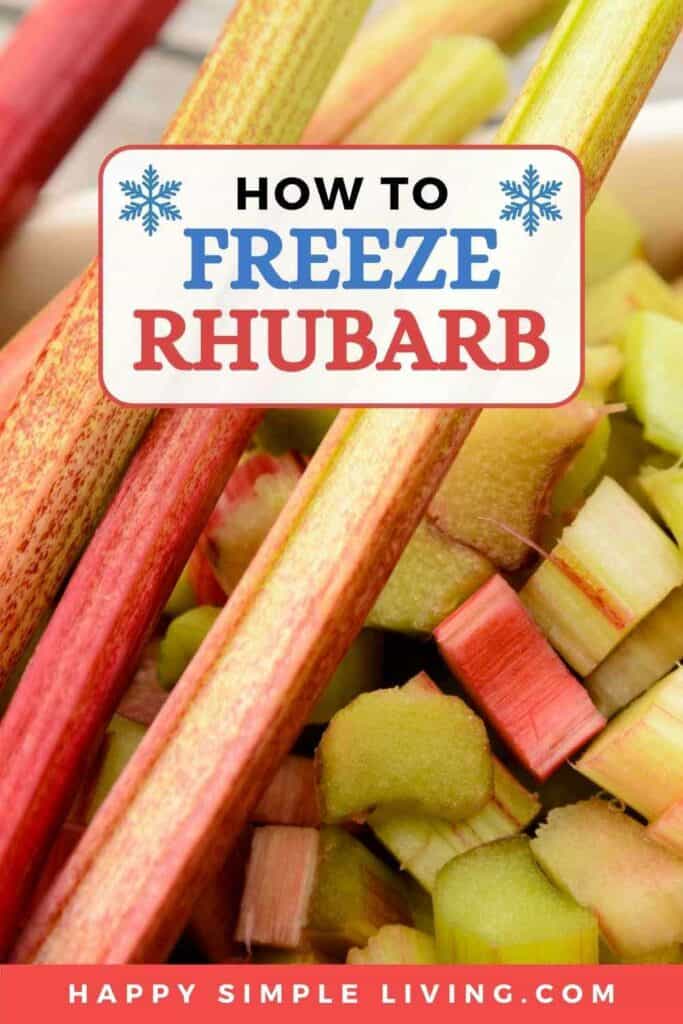
If you use Pinterest to save and share ideas, here’s a handy pin:

Eliza Cross is the creator of Happy Simple Living, where she shares ideas to help busy people simplify cooking, gardening, holidays, home, and money. She is also the award-winning author of 17 cookbooks, including Small Bites and 101 Things To Do With Bacon.