Home » Garden » 7 Ways to Get Rid of Bindweed Organically

7 Ways to Get Rid of Bindweed Organically

Ever wondered how to get rid of bindweed organically? Is there even such a thing as natural bindweed removal?

We have a world class collection of bindweed plants in our quarter-acre yard, so I’ve been on a mission to find ways to deal with it without using harmful chemicals.

Bindweed is one persistent and pugnacious plant, with many characteristics that make it tough to remove. For instance, its seeds can last up to 50 years!

Keep reading to learn how to get rid of bindweed, plus some fascinating facts — including one very redeeming quality about bindweed plants.
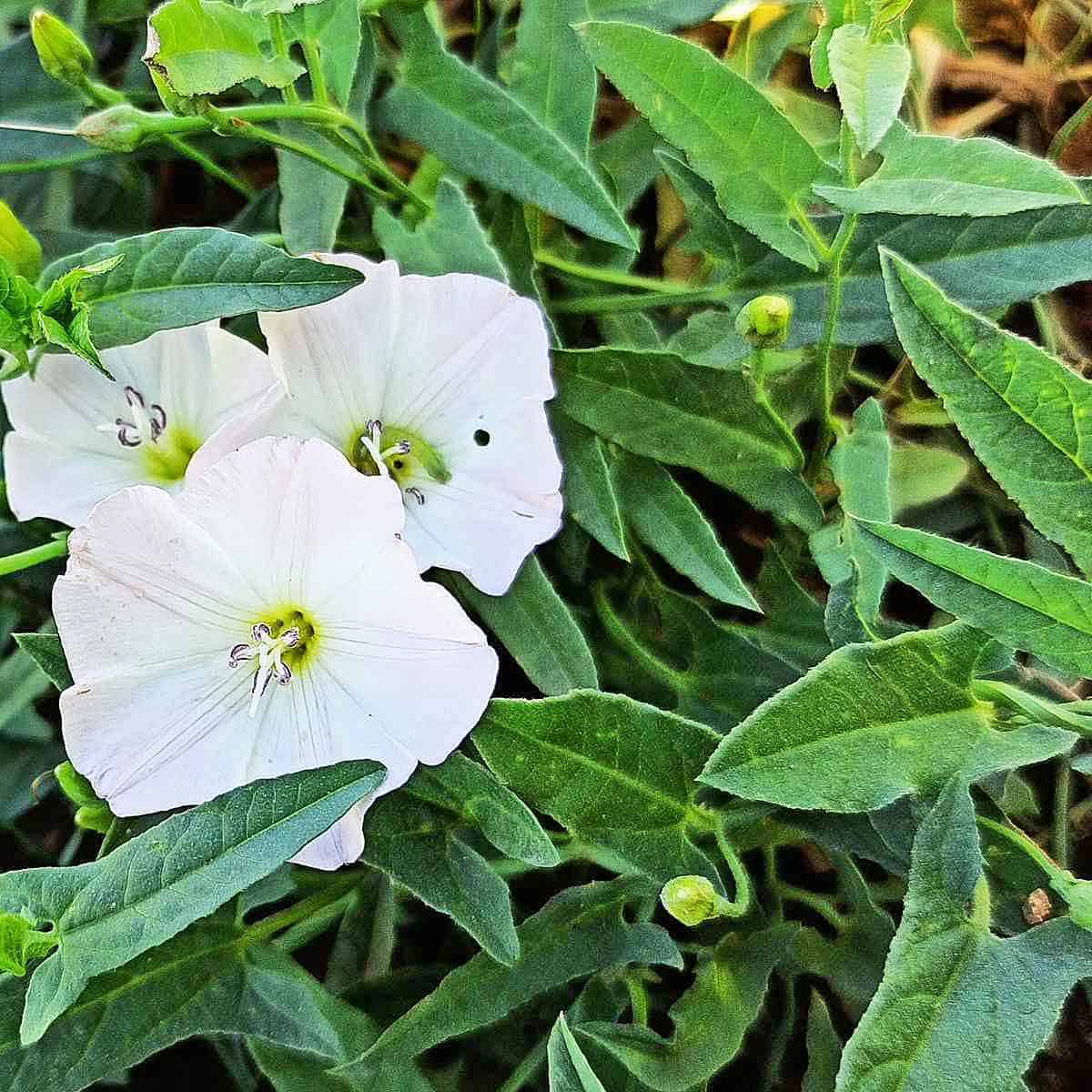
A patch of flowering bindweed.

In our yard, the weed seems to especially enjoy growing in the vegetable gardens, but it also likes to twist its tendrils around the flowers and choke them when I’m not paying attention. It climbs up fences.
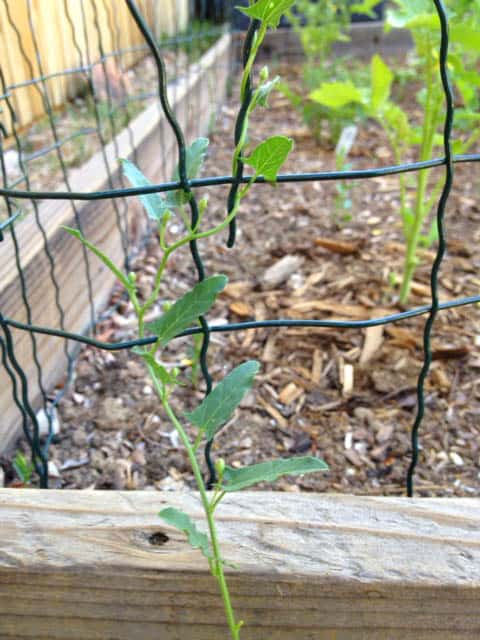
Bindweed growing up a fence.

It grows up in the most inconvenient places, like smack in the middle of the creeping wooly thyme.
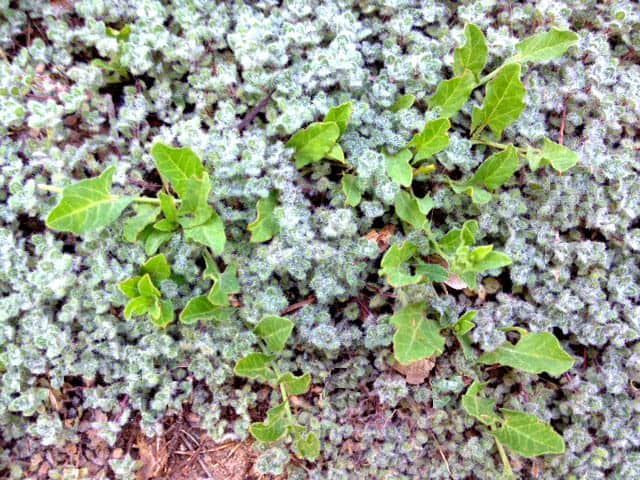
Bindweed and wooly thyme.

Give it the slightest little space, like the 1/4 inch gap between the raised garden and the paving stone, and it will creep in like a bad boyfriend.
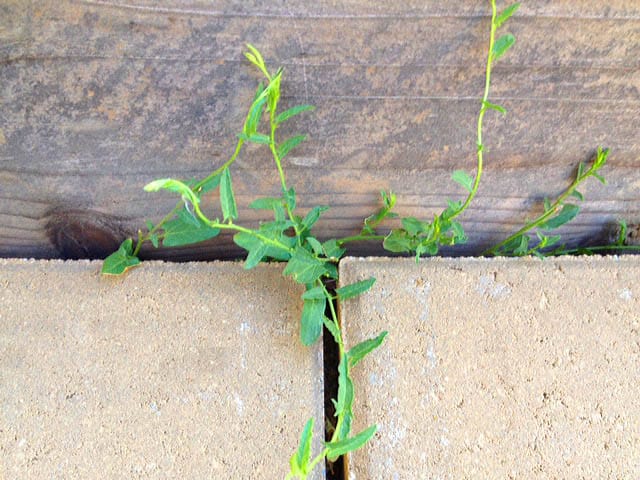
Bindweed grows up a wall.

What’s the deal with bindweed, anyway? Why is it such a pesky weed?

Well, garden trivia enthusiasts, allow me to share…

8 Fun Facts About Bindweed

  1. Bindweed has a fancy side. It also goes by the names of “Wild Morning Glory” and “Creeping Jenny.” No offense to my readers named Jenny.
  2. Field bindweed produces a tap root which can penetrate up to 10 feet in depth. So to get to the end of the root, you’ll simply need to dig a hole in your garden roughly the depth of a Cadillac. Is that going to be a problem?
  3. The multiple roots that grow laterally from the tap root can extend as far as 30 feet. To put this in perspective, imagine George Clooney, Brad Pitt, Henry Cavill, Jon Hamm and Gerard Butler lying head to toe in your garden.
  4. Bindweed can serve as a host for several viruses that affect potatoes, tomatoes and other crops.
  5. As you probably know if you’ve tried to pull it, bindweed stems break easily. When fragmented, the underground plant parts will produce new, adorable little infant plants.
  6. One plant can produce as many as 14 precious little shoots in one year, each of which grows 1 ½ to 4 ½ feet in the first season.
  7. Each plant is capable of producing 25 to 300 cute little seeds.
  8. Due to an extremely hard seed coat, the seeds can remain viable in the soil for up to 50 years. It’s sobering to realize that my bindweed seeds will likely outlive me.

Whew, that’s one feisty weed. So naturally, I wondered if this tenacious weed could have any lovable qualities.

If you share the view that each and every living thing on earth has its place and purpose, you’ll probably smile when you read about one of bindweed’s most important roles. Allow me to present:

1 Cuddly Fact About Bindweed

Which is why I’ve generously opened our back yard to all scientists who need more bindweed samples.

Free bindweed billboard.

That’s just the kind of selfless, philanthropic person I am.

Aside from finding willing takers or digging to China to reach the end of your bindweed roots, what’s an organic gardener to do?

Two readers asked for my advice about dealing with bindweed on my frugal gardening post How To Avoid $100 Tomatoes, and I’m glad they did because it made me feel, for a few moments, like Dear Abby or Dr. Phil. My readers think I know about such things! I thought to myself.

It was a delicious moment that ended too soon after I decided that I, a Gardening and Weed Expert, should probably go water my parched garden. Which is when I discovered that a new plant had quietly begun its sneaky, determined climb to overtake the garden faucet.

bindweed growing by the hose connection.

Time’s a-wastin,’ my friends, and your bindweed has probably grown another ten feet while you’ve been reading this blog post. So without further adieu, I present you with:

7 Natural Ways to Control Bindweed

  1. Discourage it young. Young seedlings can be destroyed when cut several inches below the soil. Whatever you do, don’t wait until the weeds are pre-teens.
  2. Get heavyhanded with mulch. Bindweed likes sunshine, so mulch can discourage it.
  3. Till it. Hoeing, digging, or tilling more mature field bindweed every one to two weeks for several seasons can reduce plant vigor.
  4. Torch it. Some gardeners have had luck zapping bindweed with a weed torch, which sounds kinda fun. It’s a propane tank with a little torch that burns up the weed.
  5. Attack it. My sister, who has a small farm and very green thumb, told me about bindweed mites – blessed little bugs that eat the plants. Some states have programs where you can obtain the mites for free; check with your county extension office.
  6. Fry it. Our reader Eileen has a unique way of dealing with the weed. She reports: ”I push short lengths of garden cane into the soil next to the shoots and wrap the stems around the canes. This stops the bindweed from entwining itself around other plants. I then cut off the bottom of 2 liter plastic water (or juice) bottles and remove the cap. I pop the bottle over the cane and weed and spray into the neck of the bottle with a concentrated salt mixture. I then replace the cap. Before you know it the plant has shriveled and died as the heat in the bottle ensures the salt burns it very effectively.”
  7. Carefully douse the plant it in boiling water. This is the method used by some professional large scale weed removal services.

Bonus tip: Embrace your bindweed. Train it to grow on topiary forms, and tell your neighbors it’s your prized Creeping Jenny.

Bindweed at Happy Simple Living blog

While bindweed is a constant challenge, I’ve taken a different view about the yellow dandelions that sprout up in our yard and provide pollen for the bees. You might enjoy this dandelion history lesson, written from the future.

How about you? Is bindweed a problem in your garden, and have you found an organic way to control it? Drop a comment below!

Happy hoeing from your Gardening and Weed Expert!
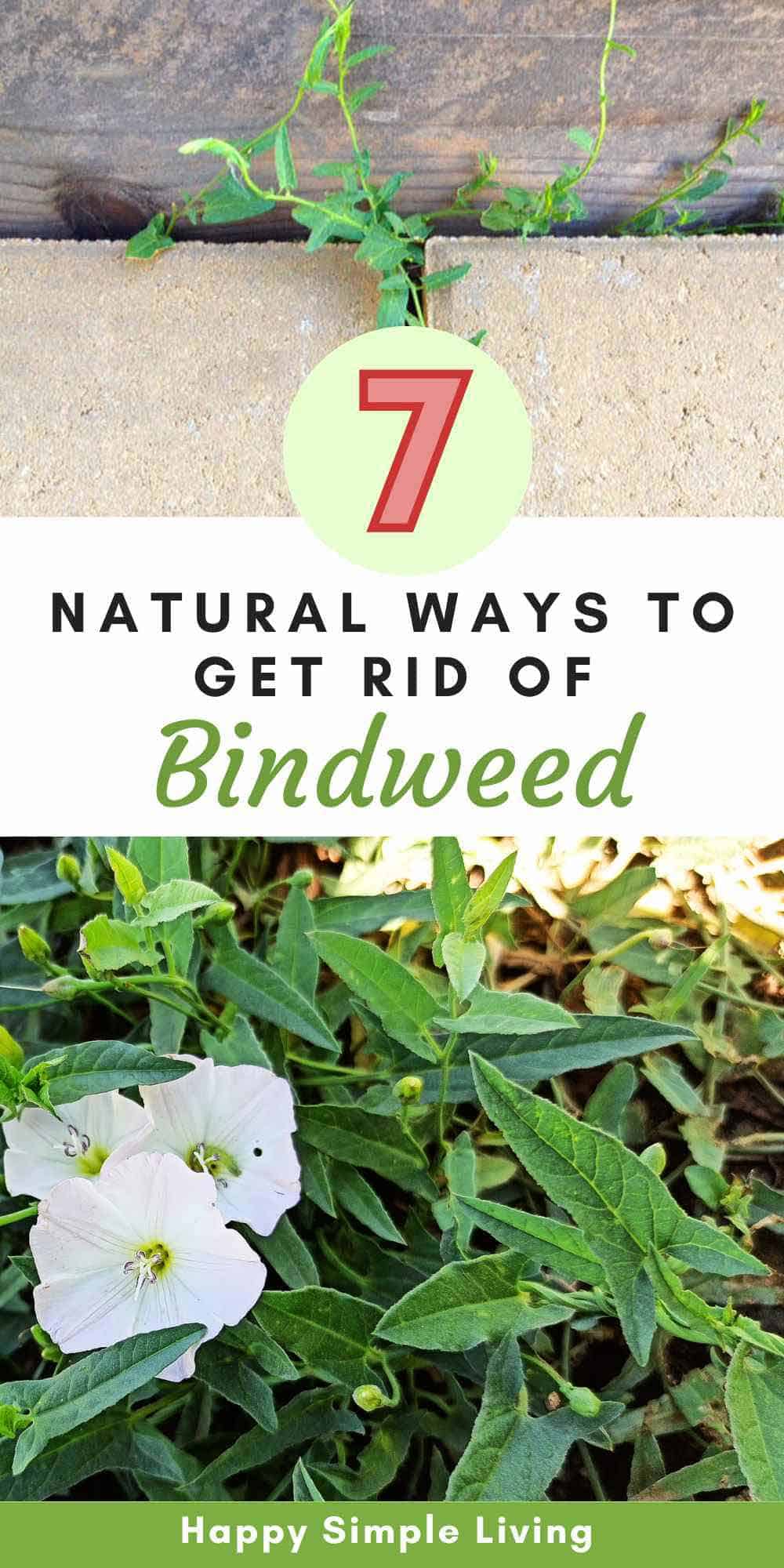
A flowering bindweed plant and a bindweed vine climbing up a wall.

84 thoughts on “7 Ways to Get Rid of Bindweed Organically”

  1. I am trying black plastic. I’m covering the entire veg. garden with it to solarize it. It may creep to the edges but I can easily pull at least that much out. The person that had the garden before me tilled it, thinking it would get rid of it.

    NEVER EVER TILL IT! Tilling it is like reproducing it at 1000x what it was! Biggest mistake ever! You cannot pick up every tiny piece of broken root from tilling and if you don’t find every broken root from tilling… you take one plant and turn it into 50 more!

    Reply
    • Never till bindweed, for sure. We did that years ago (I’m laughing now, ha ha) and it was the most lush crop ever. yikes. Still battling it and I’m planting in cattle mineral tubs, except for corn and melons. It is a task pulling bindweed constantly but I won’t use harsh chemicals in the garden. In the fields, they spray a killer on it and mark it and farm around it for 3 years to kill it. At least pick the flowers off the growers and always tie all parts of bindweed in a plastic bag to dispose. Or burn them.

      Reply
  2. Hi there! I actually have a weed pulling business and bindweed is my nemeses. Thanks for all the information and suggestions regarding this devious predator.

    Reply
  3. I actually used heavy cardboard on a hillside and covered it with mulch. It has helped, however, now the bindweed just grows in the mulch layer. After 3 years, the cardboard is disintegrating and I am sure I am in for one fun summer of spraying it daily! I did create a little tube from cardboard and put it over the bindweed shoots prior to spraying a large amount of double strength RoundUp on it. That saves the nearby desirable plants. Good luck all, the bane of our gardens will be here when we no longer are. Maybe bindweed was actually the serpent in the Garden of Eden?

    Reply
  4. Bindweed. What a nightmare. I cursed it but then remembered that everything is here for a reason. Looked into it and came across the medicinal properties. anti fungal antibacterial, anti cancer, anti diabetes antidepressant. So many things it treats. Maybe it is trying to tell us something. Its certainly potent stuff. I JUST DO NOT WANT IT IN MY GARDEN!!!! It even cleanses and brings back fertility to fields that have become toxic with pesticides and adds goodness back into the soil. How farmers can grow anything in a place where it has taken a hold i just do not know but there we go.

    Reply
  5. Just in case you though Bindweed was all bad news. Look at this.

    Health Benefits and Therapeutic Uses

    A plant that is considered a bane to agriculturists can also have multiple health benefits and medicinal uses. Some of these are as follows.

    The roots of bindweed act as a good purgative, and if used in right doses, it can be effective even in children.
    Native Americans would use the plant as an antidote to spider bites, and the leaves of the plant were believed to enhance the secretion of bile.
    The extract of bindweed is believed to arrest the growth of tumors, and its anticancer properties are presently being researched.
    Bindweed also exhibits actions similar to that of anti-diabetic medications as it is considered to inhibit the action of beta-glucosidase and alpha galctosidase. This, in turn, aids in lesser absorption of carbohydrates into the intestine, thus checking the blood sugar levels. Similar to sweet potato, the insulin-like compound in bindweed aids in effective diabetes management.
    Bindweed, especially its flowers, is believed to exhibit antibacterial and antifungal properties against a broad spectrum of microbes, including E. coli, salmonella species, and candida albicans.
    Bindweed also finds its therapeutic use for treating the effects of stress in individuals. Bindweed can be used to soothe and calm the mind and nerves. It helps bring about a feeling of being at peace with oneself. However, similar to other tranquilizers or antipsychotic medications, bindweed should be used with caution for treatment of depression, anxiety and stress.
    Other Uses

    As mentioned above, bindweed is a boon to agriculturists. Most of its other uses can be found in this industry. Some of the common uses of bindweed are as follows.

    Bindweed finds other uses in restoring the fertility of agricultural land that has been subject to the extensive use of chemicals and pesticides. It is researched and believed to eradicate chromium, copper, and cadmium from the soil.
    Bindweed also exhibits properties similar to that of nitrogen fixing plants. The presence of calystegins in the roots of bindweed act as a source of carbon and nitrogen to the rhizobacteria that is responsible for nitrogen fixation. Thus, the fertility of the soil is enhanced for agricultural use.
    In certain parts of Asia, the tender shoots and leaves of the bindweed plant are also used for culinary purposes.
    The strong twining vine can also be used for weaving or making strong ropes.

    Reply
    • I’m going to try a goat. One of my staff’s daughter has a goat who will eat anything green! I’ve spent hundreds of dollars
      hiring someone to pull out the bindweed, keeping coming back. I refuse to use toxic chemicals as I am a health care provider. I could get more customers I suppose if chemicals make someone ill.

      Reply
  6. I used boiling HOT water and edible citric acid. you could smell the leaves boiling. Worked great. Then “they” must have had a secret underground meeting and went mad spreading everywhere. Getting out the torch next!

    Reply
  7. here in South Wales I have been digging bindweed out of my potato patch until 10 pm this evening. I can clean up about a yard an hour and love digging up the Devils Guts as we used to call them. This is the third time I have dug this patch over but I am determined to have it clean by next year. The plants give themselves away with there unique shaped leaf and are easy to fork out of cultivated ground. So far I have taken ten wheelbarrow loads of bindweed root away. I do not expect to find them all in one go so I will be at it all summer if we geta summer. Very cold here now

    It is good yo hear they are useful for something but there is plenty of places for them outside of my vegetable garden.
    One lesson I have learned is never rotate where there is bindweed.
    By the way what is tilling?

    Reply
  8. Very interesting ! Your blog that is. Thank you for the witty humor included with the information given. . Bindweed your heaven sent-because without you there’s not a minute of fun & relaxing moment spent today. I almost forgot my real reason for reading your blog. Thank you for the info, I’ll try them except for tilling (or rotating), I tried that a loooong time ago and …… voila, they are indeed having a meeting down under for a mega comeback.

    Reply
  9. Oh, Bindweed Fighter Friends (BFFs)! We are a die-hard clan. Love all the upbeat banter going on here.

    I have a question and a story. Has anyone come across actual evidence that bindweed dives down nine feet? Could this just be an urban legend? It makes no biological sense to me that a plant would expend so much energy to go 9′ deep, if it can get all the nutients and water it needs within about a two-foot depth, although I have witnessed it’s incredible horizontal growth.

    It would be really cool if it does have anti-cancer properties, because it’s own growth is so cancer-like. I’d love to donate it to science!

    We dig it up at our house, and sift the soil to pick out as many rootlets as possible. Our neighbor makes no effort to control it, so it dives down from his yard below the one-foot deep steel sheets I buried along the fence to thwart it. That worked for a couple years and now it’s gone deeper and is headed west. We are not going to let it take over, so will try an even deeper barrier next. I may also try that orange concentrate (what’s it called?) along the bottom edge of the root barrier to repell it.

    The story: I joined an iris club years ago because it was the cheapest club to join here in Missoula, Montana. Members were not into the old-fashioned iris and shared those rhizomes freely. I was gifted and then planted a pale yellow old-fashioned iris that way, and I named it “Conostoga Wagon.” The rhizomes came West from Connecticut in a conostoga wagon all the way to Nebraska back in pioneer days. By the 1930s, however, the Nebraska farm this family homesteaded was ‘ruined by bindweed,’ and they had to abandon their farm. They moved here to Montana, bringing the iris starts while thankfully leaving the bindweed behind.

    With it’s astounding capacity to proliferate, bindweed has to be one of the most amazing plants on earth. Good luck to us BFFs!!

    Reply
  10. Here’s a link to a lots of science-based info about bindweed: https://www.nrcs.usda.gov/Internet/FSE_PLANTMATERIALS/publications/mtpmctn13106.pdf

    Reply
  11. I can think of only one benefit for bindweed, one of the three big B’s in my garden (the other two are mentioned below. The stems when thin and green make for great ties on staked plants (think tomatoes, dahlias and lilies). At the end of the growing season they’re dry and dead so can be put on the compost.
    Any other parts, when removed from the garden, go into paper bags ready to be burned in the fire pit in the fall. Got a nice stack in the shed already.
    Another bane in my flower beds in buttercups and blackberries, they get bagged an burned too. When my chipper/shredder was working I didn’t mind putting said big B’s in the compost, it was hot enough to kill the plants.

    Reply
  12. Dealing with bindweed can be a real pain. Do you wonder why their roots can go so deep? Maybe they are what is know as a frontier plant like comfrey which can also grow very deep roots. So deep in fact that they can reach as deep as 30 meters.

    So what is the purpose of plants that have such deep root systems one might ask?

    Well for starters they reach essential minerals that are deep below the surface that your normal plants are not able to get to. They bring those minerals to the surface depositing them on the ground when they die back. This allows other plants to grow in the nutrition provided. So that is a benefit of bindweed. Grrrr just stop strangling them.

    That brings me to the question why don’t I see bindweed in forests? What is special about them that bindweed avoids them? In the main why does it only live on the outskirts of such places?

    They also have one of the prettiest flowers of all the weeds that grow in wild places as well as infesting gardens. As mentioned by Mousefeathers about honey from bindweed. Not certain that I want a huge amount more to make honey, though my bees might like it.

    Humm wonder why bindwed is so attracted to our gardens especially as we wage war on them, ZAP gottcha errrk whats that tangling my legs, Oh nooo its grown again.

    Currently have about quarter of an acre that needs to be dealt with. Going to get some of those Mexican marigolds. They seem like they could be a natural organic answer to the problem.

    Came looking for ideas on how to deal with it. Oh well in the mean time back to the triffid killing. :)

    Reply
  13. Thank you so very much for ideas to get rid of this horrible weed that exploded in my yard this year, and keeping safety to the cats in m neighborhood in mind (including my own that likes to get out once in awhile!)

    Reply
  14. How refreshing to read your post. I loved it. I needed some humour as I struggle every year to control my bindweed. From what I have heard and read I think I will just need to live with it and dig out my vegetable garden every year and snip off throughout the year. I am praying that something will come along and wipe it out (one can only dream) :)

    Reply
  15. My wife and I bought some land and large parts are smothered in this stuff. Other parts are fairly free of it and I’m thinking those areas have probably been weed killed and that’s even worse as far as I’m concerned because I want to grow food. A tractor came in and raked over the land. Bindweed came back so fast and is now flowering. The fact that it hosts viruses is also pretty depressing. There are machines that can spray boiling water that would kill it, but it’s too expensive an option for me. It’s going to be a challenge that’s for sure. Please don’t use glyphosphate. It’s a dangerous chemical known to cause cancer.

    Reply
  16. About five years ago, I put black plastic over about 100 square feet of my back yard and left it for July and August. The bindweed is only now starting to creep in around the edges of that area. My back yard is about 4,000 square feet. If the bindweed would kill off the other weeds I’d leave it.

    Reply
  17. 45% vinegar kills most everything but on bindweed it only destroys the exposed vegetation. It is fairly expensive at around $20 a gallon but a huge time saver and after two years of many repeated applications most of my garden areas have a significant reduction of this persistent pest, most of which creeps in from the edges. Wind drift will kill desired plants and the initial fumes are quite nasty plus being a very strong acid you don’t want it on you; especially your eyes. Take precautions by wearing rubber gloves, boots and eye protection. Once it’s dry I’ve found no harmful effects but have read it may change the acidity of your soil… so far my desirables have been thriving. Except for some grasses most other weeds are eradicated and only seedlings will appear.

    Reply
  18. I have a bindweed monster living in my back and front yard. I want to try to control where it goes but the more im finding out the more nervous/excited I am to deal with this plant.. lol

    Reply
    • Dani, I hear you. It’s such a fast grower, and I have to pull it out several times a week during this time of year! Good luck! ~Eliza

      Reply

Leave a Comment

AS SEEN IN

Logos of the major news media that have featured Happy Simple Living.