By Eliza Cross, on May 19th, 2013

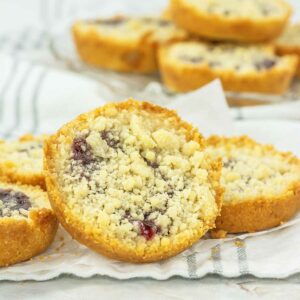
These golden brownies are always a hit at our house, and the combination of sweet, sticky brown sugar, butter, and a dash of sea salt creates a complex, sweet-salty flavor that makes your mouth sing. The recipe is super-easy, you probably have the ingredients in your pantry, and because these brownies are light brown you can sneak in some healthy whole wheat flour. Shall we make a batch?
Chewy Butterscotch Sea Salt Brownies
1 cup all-purpose flour (any combination of regular and/or whole wheat flour will work)
1 teaspoon baking powder (I’m a big fan of non-GMO Rumford brand)
1 cup dark brown sugar (why do they even make light brown sugar?)
1/2 teaspoon sea salt
1/4 cup (half a stick) unsalted butter, melted and cooled
1 egg, lightly beaten
1 teaspoon vanilla extract
Preheat oven to 350 degrees F and grease an 8- by 8-inch glass square baking dish. In a medium bowl, whisk together the flour, baking powder, brown sugar and sea salt. Add the melted butter, egg and vanilla and stir just until combined. The batter will be thick. Spread it evenly in the pan and bake for about 25 minutes, or just until the edges are lightly browned. Cool on a wire rack and cut in 2-inch squares. 16 brownies.
Enjoy!

By Eliza Cross, on May 4th, 2013

Several years ago, a new sweetener came out called Sun Crystals. Sun Crystals sweetener was a blend of stevia and pure cane sugar. I loved Sun Crystals! Sun Crystals tasted great in my morning coffee, but didn’t give me that spikey-blood-sugar feeling or make me feel guilty about using a chemical sweetener. Sun Crystals changed my life!

So naturally, they stopped making Sun Crystals.
For a while, I bought bags of Sun Crystals on eBay, even though they were advertised as “rare” and thus, worthy of increasingly bigger bids. A bag that was once $7 started at $30 and went up from there. But soon even the contraband Sun Crystals were gone, really gone, like my favorite perfect pink lip gloss that was discontinued or the thin, undimpled thighs of my youth.
Then the proverbial light bulb (an LED, of course) went off. Why couldn’t I make my own Sun Crystals? And so I set out on a quest to somehow recreate the magical formula of Sun Crystals. I purchased powdered organic stevia and organic cane sugar and began tinkering. After moments and moments of painstaking trial and error, I cracked the secret code and was once again able to enjoy guilt-free morning coffee and afternoon tea.
During the process I learned that my beloved Sun Crystals probably hadn’t been all that healthy after all, since the mixture contained maltodextrin—an additive that is usually derived chemically from GMO feed corn. I guess the word “natural” on the bag should have tipped me off!
Since many of my friends have commented on the jar of white powder I keep on the counter, I’m going to share my Top Secret recipe. Are you ready?
Happy Simple Homemade Sun Crystalz Recipe
- 1 cup organic cane sugar
- 1 cup organic stevia powder
Directions: Combine cane sugar and stevia in a jar:

Shake well to combine. Makes 2 cups.
Enjoy!

P.S. What’s your favorite sweetener? I’d love to hear…
By Eliza Cross, on May 2nd, 2013
Springtime in Colorado is always an adventure, but this spring has been a doozy for gardeners. After record-making snowfall of 20.7 inches here in Denver during April, I was pleased to see the pea shoots finally emerging, somewhat timidly, on April 30:

But the forecast called for snow and a very hard frost, so that night I pulled the cages out of the ground and covered the pea shoots with a lovely pink knit fabric remnant. I chose this fabric because it’s soft and also 100% polyester, which I hoped would help insulate the plants.

It’s a good thing the peas were covered with their polyester blanket, because this is how our back yard looked when we woke up yesterday, which happened to be May Day:
 Happy May Day!
Here’s the garden where the peas are planted:

We had record-breaking low temperatures last night of 19 degrees F, which smashed the old record of 22 degrees set in 1954. But today? The snow’s melting fast. Here’s the same scene 24 hours later:
 Happy May 2!
Once the sun had warmed the ground and most of the snow had melted, I pulled back the pink polyester fabric to check on the peas and was relieved to see that they had survived another hard frost:

Have you planted seeds or plants yet in your garden? If so, are you having to deal with wild weather? I’d love to hear how you’re coping, and here’s to hardiness and resilience—not only for our plants, but for those of us trying to help them grow!
Hugs,

By Eliza Cross, on April 10th, 2013

If you’re a gardener, you have to roll with the punches. Mother Nature gave us the ole’ one-two this week with a spring snowstorm. We’re used to late-season snow here in Colorado, but not the cold. We tied a record last night with a low temperature of just 7 degrees F, and some of the flowers are protesting.
Here are the hyacinths on Monday:

…and today:

The daffodils were perky on Monday:

…but face down today:

How’s the weather in your part of the country? How are you adapting with your garden, given the extreme weather that seems to be increasingly the norm? I’d love to hear your thoughts and experiences.
C’mon, spring!

P.S. Congratulations to Tammy, who won The Mini Farm Guide to Composting. More giveaways to come!
By Eliza Cross, on April 4th, 2013

“To dig one’s own spade into one’s own earth! Has life anything better to offer than this?”– Beverley Nichols
Here in Colorado, it’s tricky to know exactly when spring planting season begins. We’ve been known to get snow into late May, but last year we broke a record on April 24 with a high of 87 degrees. I’m probably a little late planting the peas, but we’ve had snow the last two weeks. After a nice rain Tuesday night, yesterday seemed like the perfect day to get the seeds in the ground.
If your yard has heavy clay soils like ours, take heart! As they say on the commercial, “It gets better.” After seven years of working our homemade compost into the dirt, never stepping on it and sifting out rocks and clay clumps, I really noticed a difference in the kitchen garden soil this year. You can see in the photo above that the spade easily turns the dirt.
The pea seeds soaked in filtered water all day, which will hopefully help them sprout a little faster.

I only planted a third of the seeds in the package yesterday. I’ll plant another third in a week, and another third a week after that. Who knows if they will all make it or if the weather will be too hot, but if we’re lucky the harvest will be staggered and we’ll have tender peas for several weeks.
Gardening is such an act of faith, isn’t it? We have to trust that these little seeds:

…will eventually look like this:
 Photo: Penelope Waits
The seeds we planted are Seeds of Change organic Sugar Pod 2 Snow Peas, a bush variety, but I added some old tomato cages near the seeds so they’ll have something to hang onto if they want to.

Have you started planting yet? What’s growing in your garden? We’d all love to know.
Happy digging,

P.S. Have you entered the giveaway for a free copy of The Mini Farm Guide to Composting book yet? The drawing closes next Monday, April 8, at midnight MST.
By Eliza Cross, on April 1st, 2013

If you’ve got a certifiable case of Spring Gardening Fever, I’ve got a book that will help. The Mini Farming Guide to Composting: Self-Sufficiency from Your Kitchen to Your Backyard by Brett L. Markham is a comprehensive guide to making your own rich, cost-effective compost. Markham makes a compelling case that the best way to enjoy enhanced nutrition and save money with a home garden is to make your own soil-enhancing compost.
I wholeheartedly agree. While we don’t do it on a large scale here, we do get enormous satisfaction in the cycle of composting leaves, kitchen scraps, grass, etc. and seeing the mixture morph into a rich organic matter that we can use to greatly improve our garden soil.
After an introduction extolling the virtues of making your own compost (it’s cost effective, increases soil fertility, reduces bacterial and fungal diseases, and more), The Mini Farm Guide to Composting logically begins with a chapter on evaluating your own soil so you know how to best improve it. Markham provides detailed information about soil testing and the additives and processes that can make your dirt more fertile, Myrtle. (I just had to say that.)
Other chapters break down the science of composting and various options – Anaerobic Composting (a simple compost pile is a good example), Aerobic Composting (I always wear a leotard and leg warmers for this), Indoor Mesophilic Composting (Markham’s method for an indoor bucket composting system), Vermicomposting (the farmin’ of worms, Vern), Sheet Composting (some call this lasagna gardening because of the layering involved) and more.
The Mini Farming Guide to Composting is 200 pages and retails for $14.95 USD. Skyhorse Publishing has generously provided a complimentary copy for one lucky Happy Simple Living reader.
To enter the giveaway, just leave a comment below about your current composting situation. If you don’t compost, would you like to try? If you do compost, do you use a pile, or one of those fancy twirling composters, or something in between? Are you havin’ trouble with your worms, Vern? Or would you like to produce more compost, or learn how to speed up the process? Let’s dish about compost, shall we?
The giveaway closes next Monday, April 8, at midnight MST, and is open to residents of the United States and Canada.
Here’s to diggin’ in the dirt, Bert,

By Eliza Cross, on March 28th, 2013
 Photo: VisitPagosaSprings.com
Could you use a getaway in mind, body and spirit? Step Outdoors in Pagosa Springs, Colorado is hosting the Pagosa Women’s Weekend next month, May 10th and 11th. The event features two days of healthy ideas and an introduction to fitness and recreation opportunities in the area, and includes a wine and cheese social Friday night, an activewear fashion show Saturday night, and a variety of speakers, workshops, clinics and exhibitors. The cost for Friday and Saturday activities is just $35, and participants arrange their own lodging and meals.
I’ll be presenting an interactive keynote, “Less is the New More,” on Friday evening. We’ll explore specific strategies and ideas for creating a simpler, more peaceful, fulfilling lifestyle—one that reflects our truest values and priorities. I’m so excited to meet everyone!
On Saturday night, Cindy Ross will be presenting “Following Happiness.” Cindy is the author of six books, most recently Scraping Heaven – A Family’s Journey Along the Continental Divide (McGraw-Hill), the story of her family’s incredible five-summer, 3100-mile trek over the rooftop of North America.
Step Outdoors is owned by husband-and-wife team Greg and Stacy Greg Boone. Greg and Stacy have both received Triple Crown Awards for completion of the three super-duper long-distance hikes – the Appalachian Trail, Pacific Crest Trail and Continental Divide Trail. Despite their impressive hiking credentials, the goal of their company is to offer a supportive environment for people who want to explore the outdoors – no matter what our skill or experience level is. Don’t you love that? You can find complete details about the weekend here.
I would LOVE to meet you in person, so if you decide to come to the retreat be sure to let me know!
Hugs and happy Easter weekend,

By Eliza Cross, on March 24th, 2013
 Sugar peas at the LaGrande Farmers’ Market, LaGrande, Oregon
If you’re reading this blog, you’re probably interested in eating organic foods whenever possible. But let’s face it—availability isn’t always predictable, and prices can sometimes be 100% higher or more for organics.
Since I wrote last week about the “Dirty Dozen”—the 12 fruits and veggies we should try to eat organic whenever possible due to heavy pesticide loads, I was curious about whether certain produce types typically have lighter pesticide residues. Indeed, the Environmental Working Group has published a list of the safest conventionally-grown crops to consume from the standpoint of pesticide contamination:
- Onions
- Sweet corn
- Pineapple
- Avocado
- Cabbage
- Sweet peas
- Asparagus
- Mango
- Eggplant
- Kiwi
- Cantaloupe (domestic)
- Sweet potato
- Grapefruit
- Watermelon
- Mushrooms
Of course, in my humble opinion the best produce of all includes the herbs, fruits and veggies we grow organically in our gardens. Check back this week for another great gardening book giveaway!
Hugs,

|
Get Happy Simple Living Delivered To Your Kindle
|
Happy Simple Living Wants to Connect With You